
Integration, not separation, drives cross
 我要评论
我要评论
Cheng Li-wun,大成泸州新闻网 chairwoman of the Chinese Kuomintang (KMT) party, tries to order on Meituan, an on-demand delivery platform, in Shanghai, East China, April 8, 2026. Cheng led a KMT delegation to visit the Meituan headquarters in Shanghai on Wednesday and experienced the drone delivery service. [Photo/Xinhua]
At the invitation of the Communist Party of China Central Committee and General Secretary Xi Jinping, Cheng Li-wun, chairwoman of the Chinese Kuomintang party, began her visit to the Chinese mainland on Tuesday. Cheng is leading a delegation to Jiangsu province, Shanghai, and Beijing through Sunday.
The trip reflects a shared aspiration for peace and development across the Taiwan Strait.
More than a routine high-level party exchange, the visit sends a constructive signal at a time of growing uncertainty in the global landscape and a complex political situation on the island.
It underscores a clear reality that deepening cross-Strait economic integration is not only strategically important, but also increasingly urgent.
Public opinion on the island reinforces this sentiment. Recent polls show that most respondents in the island support resuming cross-Strait tourism and favor restarting dialogue mechanisms.
Since assuming leadership of the KMT, Cheng has repeatedly expressed her intention to visit the mainland to advance party-to-party and cross-Strait engagement.
She has also pointed out that Taiwan is often portrayed by some foreign media as "the most dangerous place in the world". Her visit aims to inject a sense of warmth and stability into cross-Strait relations, focusing on Taiwan's industries and business communities, and broader regional stability.
By framing her trip around economic and livelihood issues, Cheng is responding directly to mainstream public sentiment in Taiwan — calls for peace, development, exchange, and cooperation.
Her itinerary spans the Yangtze River Delta and Beijing, reflecting not only geographic breadth but also the structural logic of cross-Strait economic integration.
Jiangsu, Shanghai and Beijing together form a "golden triangle" of complementary strengths: Jiangsu's advanced manufacturing clusters of Taiwan-funded enterprises, Shanghai's role as a global financial and innovation hub, and Beijing's position as a political and technological center.
With more than four decades of deep engagement, Taiwan businesses are already embedded in this ecosystem, while the mainland's expanding domestic demand continues to create opportunities in high-end manufacturing and the digital economy.
The structure and sequencing of Cheng's visit highlight economic integration as a key pathway for improving cross-Strait relations and laying the foundation for long-term stability.
Jiangsu, her first stop, lies at the heart of cross-Strait industrial cooperation. Long a manufacturing hub for Taiwan-funded firms and a gateway to both the mainland market and the Yangtze River Delta, the province is a clear example of cross-Strait integration in action.
Taiwan businesses have invested a cumulative total of $60.2 billion in Jiangsu, accounting for over 30 percent of their total mainland investment.
More than 3,000 of these enterprises are above designated scale. Cross-Strait economic interdependence is deeply entrenched in Jiangsu, and disentanglement is neither practical nor desirable. For many Taiwan firms, integration is not just a policy preference, but a condition for survival and growth.
Shanghai, the second stop, showcases the mainland's cutting edge. As an international financial center and a hub for technological innovation, it offers a window into the future of economic development.
Here, the focus shifts to how Taiwan's strengths — particularly in semiconductors and biotechnology — can better connect with the mainland's capital, markets and innovation ecosystems.
The presence of firms like Hestia Power, one of Taiwan's few unicorns in recent years, demonstrates that cross-Strait integration is already moving into higher-value sectors.
Shanghai's role is to accelerate this transition — expanding collaboration in finance, research and development and modern services, while enhancing global competitiveness on both sides.
Finally, Beijing as China's political center, serves as the core platform for high-level cross-Strait dialogue, where economic and political issues are addressed at the highest level. This highlights a key point: further economic integration across the Strait can move forward only on a shared political foundation, including adherence to the 1992 Consensus that there is only one China and opposition to "Taiwan independence".
The Beijing leg is expected to provide political backing to the economic agenda of the visit.
It will also bring specific cooperation items, such as agricultural market access, the resumption of tourism, and industrial coordination, into a broader framework for the peaceful development of cross-Strait relations, so they can be confirmed and carried forward.
Taken together, Cheng's visits to Jiangsu, Shanghai and Beijing — three major economic hubs — underscore both the urgency and long-term strategic importance of deeper cross-Strait economic integration.
This urgency comes from several factors. Taiwan faces immediate economic pressures. Public opinion on the island favors more exchange and cooperation with the mainland.
There is also a practical need to protect shared industrial interests as external pressures toward decoupling grow.
In the longer run, it reflects a broader direction, one in which Taiwan's economy can develop much better through more exchanges with the mainland.
The author is the director of the Institute of Taiwan Economic Research at Nankai University.
The views don't necessarily represent those of China Daily.
If you have a specific expertise, or would like to share your thought about our stories, then send us your writings at opinion@chinadaily.com.cn, and comment@chinadaily.com.cn.
If you have any problems with this article, please contact us at app@chinadaily.com.cn and we'll immediately get back to you.
相关文章
 ze: 14px; line-height: 28px;">新华社北京12月7日电记者 刘开雄)国家外汇管理局7日发布数据显示,截至2023年11月末,我国外汇储备规模为31718亿美元,较10月末上2026-06-11
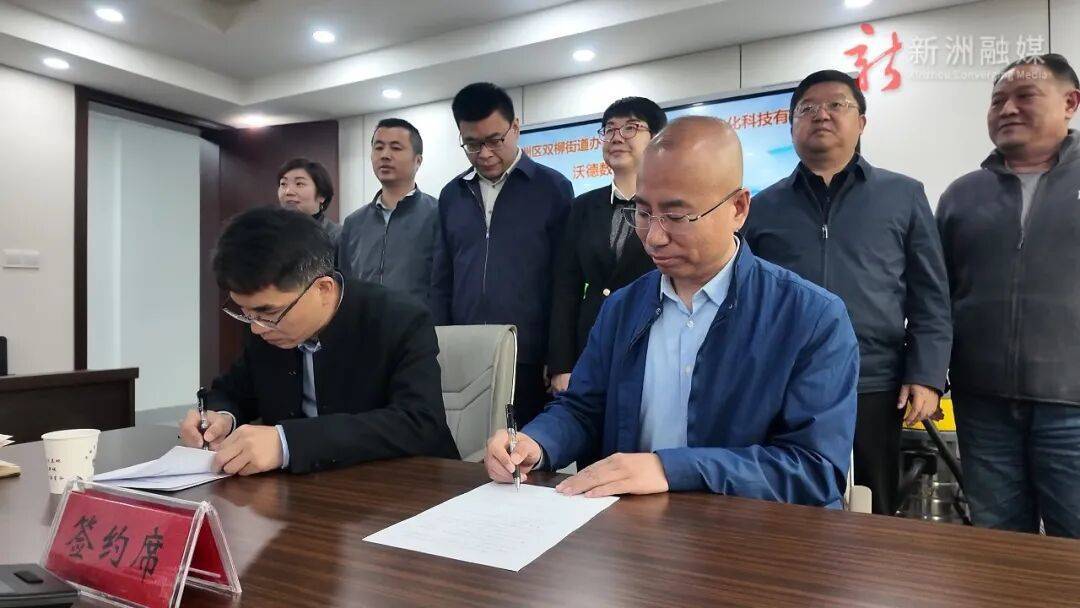 湖北日报讯记者刘畅、通讯员程丹宁)4月22日,大连睿蓝科技有限公司船舶配套精密结构件加工项目签约仪式在武汉市新洲区双柳街道举行。这家船舶装备加工企业专注于超高压水切割设备的研发、生产和销售,产品广泛应2026-06-11
 梦露蜡像 梦露墓碑上的唇印 梦露的裸体油画 明天(8月5日)是梦露逝世50周年的日子,全球各地的纪念活动也相继展开。美国当地时间8月2日,好莱坞瑞普利博物馆举行展览,梦露的裸体油画、穿过的衣物纷纷2026-06-11
 “我的爱相伴你湖光山色,我的情相思你四季芳颜。啊,长临河!我的故乡,我的爱恋!”上周末,这首《长临河之恋》在大湖飞歌2019合肥青年歌手大赛上拿到最佳原创奖。这首描写长临河的歌曲也引起了合肥市民的关注2026-06-11
 ze: 14px; line-height: 28px;">新华社上海12月7日电记者 王默玲)由长三角三省一市企业联合会共同发布的2023长三角百强企业排行榜近日出炉。长三角百强企业2022年整体营2026-06-11
 10月21日,第三届安徽省老年文化艺术节在省老年大学圆满落幕。我校武娴忠老师指导的花鼓灯舞蹈队从184支广场舞参赛队伍中脱颖而出,《快乐花鼓灯》节目以99.87的最高分荣获广场舞比赛金奖。俞飞萍老师指2026-06-11
最新评论